
How I Run a Solo 6-Figure Agency Using a Moleskine Notebook
The case for paper, friction, and refusing to turn every thought into metadata.

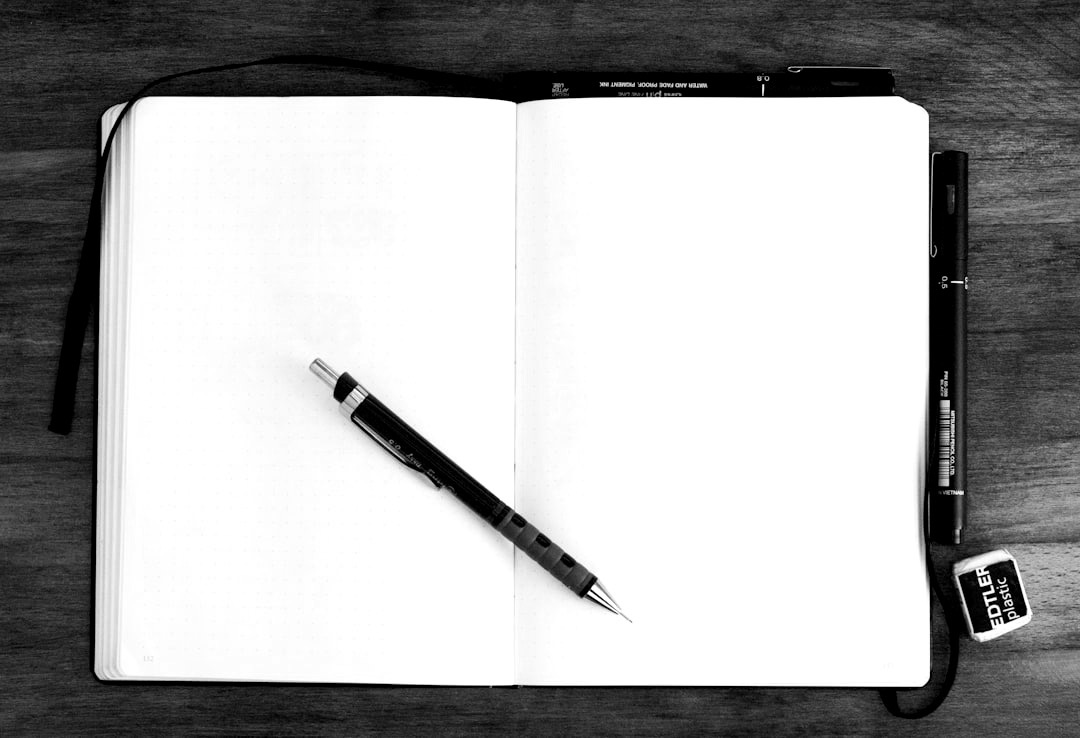
In my experience, there are 2 kinds of productivity systems.
The first exists to make you feel like a more sophisticated person than you are. It has databases, dashboards, automations, views, tags, integrations, statuses, filters, nested projects, dependency chains, artificial deadlines, dashboards of dashboards, and the faint smell of enterprise software...
The second actually helps you do the work.
I run a solo 6 figure agency with a Moleskine notebook.
I don’t favour a custom Notion command centre, or a 47-column Airtable base, or a colour-coded kanban board with emotional support labels etc. I use a black notebook, usually left open beside my keyboard, full of scratched-out tasks, client notes, positioning lines, numbers, names, invoices, reminders, article ideas, and the occasional furious sentence written in capital letters because something in the business has become stupid.
That notebook is the entire core of the agency - and everything else is downstream of it.
My laptop (a MacBook Air) is where I do the work. My calendar (FantastiCal) is where I block out time. Email (via Apple Mail) and Slack is where the requests arrive. Documents are where client deliverables get polished up and shared.
But the notebook is where I actually run the business.
It might sound absurd - until you understand what a solo agency actually requires. A solo agency doesn’t need operational complexity. It needs judgment, pace, and a way to decide every day what matters enough to earn your attention and what you can ignore, defer, delete, or (sorry) kill. A notebook gives me that.
Feed everything into software and you keep everything.
A notebook keeps only what matters.
My agency is small by design
A solo agency is a strange business model. It looks simple from the outside because there are no employees, no office, no department heads, no internal meetings, no staff rituals, no performance reviews, no complicated org chart, and no HR software sending passive-aggressive reminders about compliance training.
But the simplicity is deceptive - for the simple fact that a solo operator concentrates the entire company into one nervous system.
I do the selling. I do the strategy. I write the proposals. I run the calls. I manage the clients. I make the work. I send the invoices. I think about positioning. I think about cash flow. I think about whether the offer is strong enough. I think about whether the current client roster is healthy. I think about what to publish, what to pitch, what to retire, what to repeat, what to productise, what to keep bespoke, and what to never do again under any circumstances.
A bigger agency can hide poor judgment inside process, but a solo agency can’t.
If I say yes to the wrong client, I pay for it in hours, attention, reputation, and (unfortunately) mood. If I let my inbox dictate my day, the business starts running me. If I turn every idea into a system, I spend more time managing the system than serving the clients who pay for it.
I use the notebook as a counterweight. It keeps the business physical, makes commitments visible, and slows the reflex to treat every request as urgent. It gives me a place to see the agency whole, without pretending it’s a corporation.
A solo 6 figure agency doesn’t need enterprise tooling.
It needs an instrument of command.
The notebook isn’t a diary
My notebook is nothing ~aesthetic. And you won’t find photos of it on Pinterest. It’s a working document. Each day gets at least one page. Some days get 2. At the top I write the date. Under that, I usually write the clients or projects that matter that day. Then I write the few outcomes that would make the day successful.
Always: outcomes.
Never: tasks
A task is “reply to client.” An outcome is “client has a clear answer and next step.”
A task is “work on homepage copy.” An outcome is “homepage has a sharper hero, cleaner offer structure, and a usable pricing section.”
A task is “send proposal.” An outcome is “prospect understands the engagement, the fee, the timeline, and the reason to move.”
Chase tasks and you stay busy. Chase outcomes and you take responsibility.
Most mornings I write some version of 3 questions:
What must move today?
What’s currently stuck?
What am I avoiding?
Solo operators accumulate avoidance, whether or not you admit it. You avoid the awkward email. You avoid raising the price. You avoid clarifying the offer. You avoid asking for the decision. You avoid admitting a service line is too fuzzy. You avoid the client who has become a drain because they’re nice and the retainer is useful. You avoid finishing the thing that would create more demand because staying almost ready is emotionally safer than being judged in public.
Write the dodge down by hand and it looks as ridiculous as it is.
You can hide from a dashboard.
It’s harder to hide from a sentence you wrote yourself.
One page beats 100 tabs
Knowledge workers now live inside permanent partial attention.
There are browser tabs, chat threads, app notifications, client portals, shared drives, Slack messages, calendar invites, document comments, voice notes, bookmarks, read-later queues, and a fresh crop of tools promising to rescue you from the overload you picked up from the last crop of tools.
The result is operational fog. You capture everything and hold none of it.
The notebook solves this by being brutally finite.
A page can only hold so much, and the limit is deliberate.
When I open the notebook in the morning, I’m not trying to mirror the entire business. I’m trying to identify the small number of things that matter now.
The notebook becomes a compression layer.
All the noise of the business goes in: emails, ideas, calls, client demands, strategy questions, invoices, sales leads, writing fragments, product thoughts, worries, deadlines, and inconvenient truths.
A smaller set comes out: today’s moves.
This is why solo operators do well with paper. You have to work slightly harder to write on it, and that extra friction is exactly what you need when you have too much information and too little priority.
Software companies build their tools to strip the friction out of capture.
That sounds good until your system becomes a landfill of captured intent.
The notebook makes capture slightly annoying, which means I only write down what has enough force to matter. A client issue worth solving. A line worth keeping. A decision worth making. A number worth remembering. A risk worth watching. A promise worth tracking.
The notebook doesn’t ask me to maintain a perfect record of the business.
It asks me to pay attention.
The operating system
The system is simple.
Every morning, I start a fresh page.
I write the date. Then I write the current active clients. Beside each client, I write the single next thing that has to happen.
That might look like:
Client A: send revised positioning direction.
Client B: review launch copy and identify weak claims.
Client C: follow up on invoice.
Prospect D: send scope.
Studio Self: publish essay.
Admin: reconcile payments.
Then I circle the 2 or 3 things that have to happen before I can count the day a success.
The circle is important.
A long list comforts you. A circle confronts you.
If I finish the circled items, I’ve done what the day needed. If I do everything except the circled items, I was productive in the least useful sense.
Below the client list, I keep a running section for fragments.
These are lines, hooks, angles, objections, bits of strategy, business thoughts, reminders, and language that may become useful later. A solo agency runs on taste and pattern recognition. Good fragments matter. They’re the raw material of positioning, copy, essays, proposals, and client work.
A phrase might wait in the notebook for 6 weeks before it becomes the centre of a homepage.
A half-sentence from a client call might reveal the problem behind a scope.
A note written in irritation might become a service principle.
This is one of the hidden advantages of paper. It allows mess without making the mess feel like failure. Digital systems want structure too early. Paper lets the thought remain alive.
When the day ends, I do a short closeout.
What shipped?
What changed?
What’s still open?
What carries over?
I rewrite anything unfinished but still relevant on a fresh page the next day. This is the tax. If I keep rewriting the same item for a week, the notebook is telling me something.
Either the task matters and I’m avoiding it.
Or the task doesn’t matter and I should stop pretending it does.
No archive tag can do that with the same moral force as rewriting the same sentence by hand for the 5th day in a row.
Client management without cosplay
A lot of agency process exists because agencies have too many people touching the work.
There are account managers to translate clients to strategists. Strategists to translate clients to creatives. Creatives to translate strategy into work. Project managers to translate the work back into deadlines. Senior people to reassure the client that the agency has adults somewhere in the building. Juniors to do the first pass. Directors to revise the first pass. Partners to enter at the end and say the obvious thing everyone was too process-bound to say earlier.
A solo agency has a different shape.
The person who takes the call is the person who does the work. That single fact is both the advantage and the danger.
Because everything routes through one person, I manage attention as much as I manage clients. Every client wants context, every project needs continuity, and I feel every open loop pulling at me.
The notebook keeps a live map of the client load.
For each active client, I track 3 things:
What they think they need.
What I think they actually need.
What I’ve promised next.
These three rarely match.
A client may think they need “better messaging.” They might need a clearer decision about who the product is for. They may ask for a launch plan when the underlying problem is that no one has agreed on the category. They may want thought leadership when the executive point of view is still too vague to survive contact with a sceptical reader.
The notebook gives me a place to hold that distinction outside the churn of deliverables.
It also helps me avoid the classic solo consultant failure mode: becoming reactive while believing you’re being responsive.
Responsiveness is useful. Reactivity is expensive.
When a client sends a request, I can capture it. But I don’t automatically let it reorder the day. I look at the notebook, at what I’ve already promised, at the circled outcomes. Then I decide whether the request belongs today, later, or nowhere.
I keep the business alive by doing exactly that.
A solo agency dies when every incoming message becomes the new boss.
The money page
There’s always a money page.
Somewhere in the notebook, usually every week or two, I write the basic numbers.
Current monthly recurring revenue.
One-off project revenue.
Outstanding invoices.
Expected close dates.
Retainers at risk.
Likely renewals.
Dead leads.
Warm leads.
Needed revenue.
I don’t turn this into a finance dashboard because I don’t need to cosplay as a CFO. I need to stay close to the commercial reality of the business.
I see the numbers more clearly when I write them plainly.
How much is coming in?
Who owes money?
Who might leave?
Who might buy?
What do I need to sell?
What do I need to stop?
A solo 6 figure agency has a simple economic truth: the work and the revenue are joined at the hip. You can’t separate operations from sales from delivery from positioning. Every week, the notebook shows me whether I’m building a business or merely servicing a set of obligations.
If you’re good at client work, you carry a hidden danger. You can fill your week with delivery and tell yourself the business is healthy because you’re busy and paid.
Then a retainer ends. A prospect goes cold. The calendar looks open 2 months out, and you remember you’re also the sales team.
The notebook keeps that from becoming a surprise.
It forces me to ask commercial questions while there’s still time to act.
Do I need to publish more?
Do I need to follow up?
Do I need to improve the offer?
Do I need to raise prices?
Do I need to make the current work more visible?
Do I need to stop accepting custom projects that create cash now and confusion later?
You can’t outsource those questions to software. You answer them or no one does.
The notebook makes sure I ask them.
Why handwriting works
When you write by hand, you change the relationship between thought and action.
Type, and you move fast enough to outrun your own judgment. Write by hand, and you slow down enough to let it keep up.
That matters in a business where the main asset is thinking.
When I write a positioning line by hand, I feel the weakness sooner. The vague word sits there. The overlong sentence becomes physically irritating. The fake clarity announces itself. The line either has force or it doesn’t.
When I write a plan by hand, I see whether it’s a plan or a mood.
When I write a goal by hand, I can tell whether I believe it.
The notebook isn’t magical. It’s useful because it makes thought more embodied. It pulls work out of the infinite scroll of digital abstraction and puts it in front of me as marks on a page.
There’s also a memory effect. I remember things I write down by hand more reliably than things I type into a system. Even when I never look back at the page, by writing it down I’ve already done some of the work.
On client calls, this matters most.
I take notes by hand because I want to listen differently. I’m filtering: looking for tension, language, assumptions, contradictions, and the sentence behind the sentence.
A transcript captures what people said. A notebook captures what mattered. That difference is the whole job.
The notebook creates a boundary
A solo agency’s greatest threat is seepage - because it all naturally tends to bleed together. I carry client problems into weekends, sales worry into delivery, admin into the creative hours. You leave one email half-answered and worry at it all afternoon. A proposal you haven’t sent becomes a background process. You bleed attention on a hard decision before you’ve even made it.
The notebook helps contain that. When I write something down, it has a place to live. Which doesn’t mean it disappears - but it does stop floating, and an anxiety tied down gets to become a fact.
I can write “raise issue with client on Friday” and then stop rehearsing the conversation every 20 minutes. I can write “new offer idea: diagnostic sprint before retainer” and let it wait until the right page. I can write “invoice follow-up” and know it’ll return tomorrow if I fail to handle it today. It’s a boring form of psychological relief - lifted from the GTD framework.
Solo operators need mental continuity. You can’t afford to spend half your intelligence on remembering what you’re supposed to do. The notebook externalises the open loops without burying them in a tool that requires its own maintenance cycle.
The anti-scale system
The Moleskine works because it doesn’t scale. That might sound like a flaw. But it’s exactly what I want from it.
A notebook can’t hold infinite clients, infinite offers, infinite content ideas, infinite admin, infinite follow-ups, and infinite plans. It starts to look ridiculous: the pages crowd, the lists get ugly, the same names recur, the same unresolved problems keep appearing.
Good; the mess is data.
If the notebook becomes unmanageable, the business is becoming unmanageable. If every day requires too many circled tasks, I’ve created a bad model. If every client needs constant intervention, I’ve sold the wrong kind of work. If every week has too many urgent items, I’m underpricing, overpromising, or failing to set terms.
You can make dysfunction look organised if you use (and of course, pay through the nose for) the right software. On paper, you see it for what it is.
This is why I distrust tools that scale too gracefully for a small business. You hide behind them instead of asking the harder question: should this be here at all?
I keep the agency constrained. I hold an opinion about what I’ll take on and what I won’t, I set a ceiling on complexity, and I protect my own attention as the core production asset.
The notebook enforces that through physical limits.
AKA:
There are only so many lines on the page.
There are only so many serious commitments one person can hold.
There are only so many clients who can receive high-quality thinking at once.
The notebook doesn’t let me forget that - not for a moment.
What goes digital
I use software constantly. I write digitally. I deliver digitally. I manage files digitally. I communicate digitally. I schedule digitally. I store final work digitally. I use tools where tools are useful.
But I don’t let software decide the shape of the business.
Digital tools are excellent for storage, production, distribution, and retrieval, and terrible at judgment. Lean on them and you accumulate for the sake of it, you capture everything because capturing looks like progress (See: The Tremendous Pile Of PDFs!), and you confuse having a system with having a point.
The notebook comes before the software; and it decides what deserves to enter the machine.
A task goes digital when it needs a reminder, a deadline, a collaborator, a file, a recurring process, or a searchable archive. Until then, it can live on paper, and many things should in fact stay there. Most ideas don’t deserve a database, most projects don’t deserve a folder, most tasks don’t deserve metadata.
The notebook is a quarantine zone for intent - meaning I only let the strongest items out.
Following that one rule, I’ve dodged hundreds of hours of fake organisation.
Why it fits the business
The Moleskine works because it matches the business model.
A solo agency sells the concentrated judgment of one person. I want a setup that protects that judgment, not one that buries it under process.
The notebook gives me a daily view of the whole game:
the clients,
the delivery,
the money,
the promises,
the risks,
the ideas,
the avoidance,
the next steps.
It’s not elegant, at all. It’s not automated and I can’t connect it to OpenClaw or Claude Code or whatever other tool is the current flavour of the month. It doesn’t send notifications, and it doesn’t integrate with anything. It won’t generate a weekly report. It can’t be shared with a team. It has no onboarding flow, no templates marketplace, no founder mode, no AI assistant, no customer success manager, and no roadmap.
This is exactly why I trust it: it has no agenda except the page and the things I choose to write on that page.
Every morning the notebook asks the same plain question: what are you doing today that matters?
For a solo agency, that question is the business, and anything // everything else is mere decoration. Don’t get me wrong, decoration has its place. But it’s not the work.
If you want to reach out and talk about doing that work together, you should: here’s my agency, and I answer every message personally. Email joan@thisisstudioself.com
I agree with your view of the notebook. What appeals to me most is not the system itself, but the fact that it belongs to the physical world.
A notebook takes up space. A rolled set of plans takes up space. A vinyl record takes up space. They all impose limits and force you to choose.
Digital tools do the opposite. They allow us to keep almost everything and discard almost nothing.
Borges imagined Funes condemned to remember everything. Sometimes I think we've confused memory with accumulation.
Thank you for that. The way I do things currently is is similar but in various log/txt files on my laptop. You just gave me a great idea! Thank you, so much.
P.S. Muji (Japan) has very good notebooks. I use them for my general writing.